High Tide
High Tide is our email newsletter—a blend of surf, business strategy, design, marketing, technology, beach culture, and Internet goodness every month.
How to Scale Influencer Marketing While Staying 100% Authentic
Influencer marketing is one of the most powerful growth levers available to a lifestyle apparel brand. It's also, by definition, hard to scale — because authentic influence is finite, and the moment you start manufacturing it, the brand starts to erode.
And while there’s a finite amount of true influencers (athletes, entrepreneurs, artists, etc) in any niche, there IS a way to scale influencer as a channel without resorting to brand-destroying tactics like giving anyone and everyone an affiliate code.
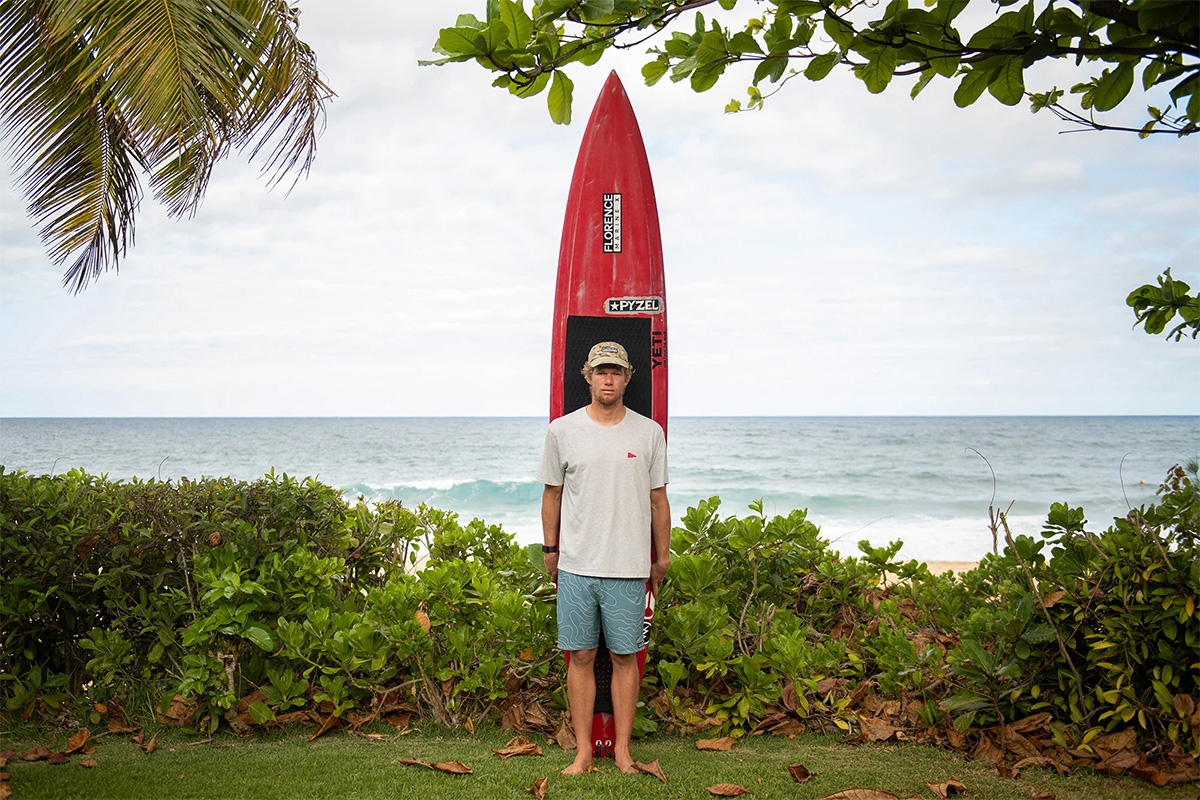
To pressure-test how we think about this, we sat down with Scott Carrington, who now leads DTC and marketing at Forgeline.
We spoke with him during his tenure as head of digital at Municipal (a Sunnyside client since 2023), got his POV, and threw in our own two cents.
Resist the temptation of fast, easy revenue
The default path most brands fall into, especially under pressure to hit growth numbers, looks like this. Spin up a Grin or Shopify Collabs program. Open the gates to anyone with a passable feed and a willingness to post. Set up affiliate codes. Run the math on attributable revenue. Declare the program working when the spreadsheet says it is.
In the short term, this can produce real revenue. And that’s the exact problem:
In the long term, for any brand whose equity depends on authenticity, it's actively corrosive.
The reason is straightforward: the creators who self-select into these programs are overwhelmingly optimizing for affiliate payouts, not for the brand. They're not influencers in any meaningful sense of the word. They're people who want to be paid to post, and the brand is interchangeable.
This is what Scott was pointing at when he described how the category has shifted on him:
"The term influencer has sort of soiled it for me in some ways. It’s become a thing where so many 22 year olds want to be an influencer - that's the number one career that kids want going into college, or something crazy like that."
And there’s nothing wrong with that per se, but it’s not necessarily the right face for every brand - especially when those people are just chasing an affiliate payout.
So the question is, how do you scale influencer as a channel without diluting the waters?
The origins of influencer marketing
It’s helpful to take a step back and ask how we got here.
Before the word "influencer" existed in any commercial sense, action sports and outdoor brands had already built the thing everyone is now trying to reverse-engineer.
But they didn’t call it “influencers,” they just had teams.
Athletes who rode for the brand, wore the product because it was the best product for what they did, and tested gear in the field because they were the people the gear was made for.
The logic ran in both directions — the brand made better product because of the athlete, the athlete had better gear because of the brand.
Scott keeps coming back to this:
"I think so much in the past, at least in the sort of lifestyle brands, it was like you're a product tester. You’re helping to develop the product. There’s a real connection because you're out there using it."
The important insight here is that it wasn’t a “marketing” program. It was a product program that happened to have marketing value as well.
The distinction matters because everything that's broken about today's mass-market influencer programs traces back to inverting that.
Two modes that work, for different reasons
A quick caveat before we get to the framework, because the easy version of this conversation is "athletes good, influencers bad," and that's not actually right.
There are at least two distinct modes of authentic creator partnership in lifestyle apparel, and they operate on different logic.
- The action sports and outdoor model
Athletes, ambassadors, team riders. People whose connection to the brand is rooted in genuine product use and shared values. This is the mode Municipal sits inside, and the mode most of our surf, snow, and outdoor clients operate in. The currency here is credibility through use: the athlete chose this brand because the brand makes the best version of what they need.
- Fashion-forward creator model
We see this clearly with another of our clients, Beek, a women's leather goods brand whose growth has been driven significantly by creators with genuine taste-making authority in fashion-adjacent corners of social. Essentially it says, "this creator's eye is part of the cultural conversation, they've chosen Beek, and that choice signals something to their audience."
To be clear, both of these modes can (and should be) deeply authentic. One isn’t better than the other, they’re just very different.
It’s based credibility through product use in the first, credibility through curation in the second. What unites them is that in both cases, the creator made an actual choice. They believed in the product. They could have picked something else and didn't.
And this is the key to scaling with authenticity: to preserve that property at scale.

How we think about scaling authentic influence
There is no one-size-fits-all formula here, and any agency telling you otherwise is selling you something.
Different brands sit in different categories, with different community structures, different ambassador histories, and different operating capacity. The right program for a thirty-year-old surf brand with a deep team roster is likely not the right program for an emerging women's footwear brand finding its first creators.
That said, our general approach is to think about influencer marketing as a set of concentric circles built outward from the core, where each ring has its own purpose, its own selection criteria, and its own operating model — and where the integrity of every outer ring depends on the integrity of the rings inside it.
The core: high-credibility ambassadors
A small number of people with a deep, genuine relationship with the brand. In action sports, this is your team — athletes who actually use the product to do the thing the product is for. In fashion-forward categories, it's a handful of taste-makers whose own brand is genuinely entangled with yours.
The relationship here is closer to partnership than promotion. They're co-creators, product testers, brand fixtures. They don't have a posting quota.
Second ring: The activated community
Existing customers who already love the brand and have some kind of social footprint, however modest. Not influencers in the traditional sense — but real users with real reach inside their actual networks.
The work here is less about briefs and more about creating the conditions for organic conversation: surprise-and-delight gifting around real moments, UGC programs, the kind of customer service interactions that get screenshotted and shared. This ring is where most brands underinvest, and where the returns compound the longest.
Third ring: Micro and nano creators with genuine affinity
Creators who've already engaged with the brand organically — who follow the brand, post about it unprompted, show up in the comments. These are people you identify because they self-selected in, not because you searched a database for engagement rates in a demographic bucket.
The selection filter here is simple: are they already in the world of the brand, before any commercial relationship exists? If yes, formalize. If no, pass.
Larger paid partnerships
Reserved for situations with a specific strategic purpose — a product launch, a category expansion, reaching a defined new audience. Treated as exception cases rather than the default mode of the program. Vetted on values and product fit before audience size.
Two principles tie this together.
1. You can’t skip rings
A brand with weak core ambassadors that's trying to pay for large outer-ring partnerships will feel hollow no matter how much it spends, because there's nothing underneath the spend. The brands that scale authentic influence successfully are the ones that built the inner rings patiently — sometimes over years — before pushing on the outer ones.
2. It needs hands-on, active management.
The constraint on scaling this kind of program is almost never budget. It's operational capacity. Each ring requires a different operating model, and most growth-stage brands are not staffed to run all four at once. Scott was candid about this:
"We're not big enough to have a dedicated person managing a Shopify Collab program or something like that or program with Grin."
That's not a failure. It's an honest read of where most brands are in their arc. A program built without the operating capacity to sustain it reverts to box-checking within a quarter, and box-checking is worse than not running the program at all.
The five-year version
The brands that come out of the next few years with the strongest influence programs in lifestyle apparel are going to be the ones that resisted the temptation to maximize the channel as a short-term revenue tactic, and instead treated it as the long-horizon investment it actually is.
That means a smaller program than the tools would let you run. It means filtering on product affinity and values alignment rather than follower count. It means building the inner rings before the outer ones, and being honest about which ring your operational capacity can actually support today.
And it means accepting the real constraint of the channel, which is that authentic influence is genuinely finite. The brands that scale it best aren't the ones that pretend otherwise. They're the ones that figure out how to multiply the surface area of authenticity they already have — by deepening the relationships at the core, activating the community that's already there, and letting growth at the edges happen as a consequence rather than as the goal.
That's a harder program to build than the one the tools want to sell you. It's also the only kind that's worth anything five years out.
Thank you for reading High Tide. Please forward this to your friends.
Follow us on Instagram